A Complete Guide to Real Estate Investment in Thailand

Buying property abroad may feel unfamiliar at first, but the process can be smooth and straightforward when buyers understand the ownership options, associated costs, and key procedures, supported by guidance from experienced legal and real estate professionals.
Whether purchasing a primary residence, holiday home, or long-term investment, and exploring potential benefits linked to long-stay visa programmes, having accurate information will help you make a well-informed decision with greater clarity and confidence.
Key Takeaways
- Foreigners can own condominiums freehold in Thailand (up to 49% of a building's saleable area), but cannot own land outright. Landed houses are purchased via a registered long-term leasehold on the land, while owning the building itself freehold.
- Total government fees and taxes at purchase typically run 2.5% to 6.3% of the property's appraised value, including transfer fee (2%), specific business tax (3.3%) or stamp duty (0.5%), and withholding tax.
- Thailand's luxury segment is outperforming the broader market. Existing luxury supply is at a 93% sales rate and downtown asking prices are projected to rise up to 15% in 2026, even as mass-market residential transfers fell 9.3% in 2025.
- Buying property in Thailand does not automatically grant a visa, but three programmes recognise real estate as a qualifying investment: the 3M THB Property Investment Visa, the 10-year LTR Visa (from USD 500,000), and Thailand Privilege.
Foreign ownership in Thailand
This is the single most important thing to understand before anything else. Foreigners have restrictions on land ownership in Thailand. This applies to houses, villas, and any landed property, since the land itself is off-limits to freehold foreign ownership under the Land Code Act.
Condominiums are the exception. Foreigners can own condo units freehold, in their own name, provided foreign ownership in that specific building doesn't exceed 49% of the total saleable floor area (not 49% of units, which matters more than it sounds). Once a building's foreign quota fills up, no more foreign buyers can purchase freehold units there, so it's worth checking a building's current quota status when searching for a unit.
For landed houses and villas, the standard route for foreign buyers is a registered long-term leasehold, typically 30 years with renewal terms built into the contract, while owning the building itself outright. Thai nationals, by contrast, can buy land and houses outright with full freehold title. This distinction affects nearly everything else in this guide, from financing to visas, so it's worth getting straight before you go further.
What It Actually Costs to Buy
Thailand doesn't have a single "purchase tax." Instead, there's a layered system of charges collected at the Land Office when ownership transfers:
Transfer Fee: 2%
Charged on the government-appraised value or the sale price, whichever is higher. It's typically split 50/50 between buyer and seller, though this is negotiable and should be written into the contract.
Specific Business Tax (SBT): 3.3%, or Stamp Duty: 0.5%
These two are mutually exclusive; you pay one or the other, never both. SBT applies if the seller has owned the property for less than five years; otherwise stamp duty applies instead. This charge is formally the seller's responsibility, though in practice costs are sometimes shared or built into the price.
Withholding Tax
Calculated at a flat 1% of the assessed value if the seller is a company, or on a progressive scale based on the seller's income and ownership period if the seller is an individual. Also formally a seller cost.
Altogether, buyers should budget roughly 2.5% to 6.3% of the property's appraised value in total government fees and taxes, depending on how the costs are split and how long the seller has owned the property. There's also a Thai government stimulus currently reducing the transfer fee to 0.01% on homes under 7 million baht, but this discount is only available to Thai nationals; foreign buyers remain on the standard 2% rate regardless of price.
After purchase, owners face an annual Land and Building Tax based on the property's assessed value, with rates varying by how the property is used and whether it sits vacant. 2026 marks the first year of full-rate enforcement after several years of pandemic-era reductions, so budget for this as an ongoing cost rather than a one-off.
Financing: What's Actually Available to Foreign Buyers
Most foreign buyers in Thailand still purchase in cash, and it's worth planning around that reality rather than assuming a mortgage will be straightforward. That said, financing isn't impossible.
A handful of banks, including UOB Thailand, Bangkok Bank, ICBC (Thai), and CIMB Thai, do lend to foreign buyers, but almost exclusively for completed freehold condominiums within the foreign ownership quota; villas, leaseholds, and land-linked properties are generally not mortgageable through these channels. Expect a loan-to-value ratio of roughly 50-70% (well below the 80-90% Thai nationals can often access), interest rates in the 5.5-9% range as of early 2026, and a fairly document-heavy approval process, with approval rates for foreign applicants sitting around 30-40%.
Alternatives exist for buyers who do not satisfy the standard banking criteria. Many developers offer direct installment financing during construction, interest-free but requiring a larger lump sum at completion. Asset-based lenders like MBK Guarantee will lend against the property itself with minimal income documentation, though at higher rates, often 8-10%+. And a small number of international private banks in hubs like Singapore, Hong Kong, and the UAE will finance Thai property for high-net-worth clients, typically requiring a substantial minimum portfolio size.
Property and Visas: Two Separate Things That Sometimes Connect
Although buying property in Thailand may not grant visa or residency, there are several current long-stay visa programs as as a qualifying investment:
The ฿3M Property Investment Visa
Introduced in October 2025, this allows foreign buyers of qualifying freehold condominiums or registered long-term leases valued at 3 million baht or more to apply for a renewable long-stay visa, with funds required to be remitted from overseas. It's application-based through a Ministry of Tourism letter rather than automatic, and doesn't include work rights.
The LTR (Long-Term Resident) Visa
A 10-year BOI programme aimed at wealthier applicants. Under the "Wealthy Global Citizen" category, a real estate investment of at least USD 500,000 can serve as one of several qualifying investment types, alongside Thai government bonds or approved business investment. LTR holders also benefit from a flat 17% personal income tax rate on relevant income and, for some categories, a digital work permit.
Thailand Privilege (formerly Thailand Elite)
A payment-based long-stay membership, from roughly 650,000 to 5,000,000 baht depending on the tier, with no property or income requirement at all. It's a fallback for buyers who don't meet LTR's asset or income thresholds and want long-stay simplicity without qualifying activity.
Because these programmes shift with policy cycles, As these programmes evolve alongside policy cycles, prospective buyers are advised to confirm any visa strategy tied to a property purchase with a Thai-licensed immigration lawyer prior to commitment, rather than rely on information that may since have changed.
Where the Market Stands Heading Through 2026

Thailand's property market isn't moving as one block right now. The mass-market residential segment has faced real headwinds: household debt, cautious bank lending, and a large volume of unsold condo inventory in Bangkok specifically. Nationwide residential transfers fell 9.3% year-on-year in the first nine months of 2025, according to REIC.
The luxury and prime segment is telling a different story. CBRE's 2026 outlook points to a clear "flight to quality," with existing luxury supply already at a 93% sales rate and downtown asking prices projected to climb as much as 15% this year. Savills sees the same pattern, describing continued resilience and growth in the luxury tier even as the broader market corrects, increasingly supported by international demand. Foreign capital remains heavily concentrated: Bangkok, Chonburi (which includes Pattaya), and Phuket together accounted for over 80% of all foreign condominium transfers in 2025.
Regionally, performance varies a lot. Phuket's premium west coast zones have been appreciating at an estimated 8-12% annually, driven by strong foreign cash demand. Bangkok condominium prices have been broadly flat to slightly positive, while single-detached house prices in the capital actually dipped slightly year-on-year, even as the luxury tier within that same segment outperforms. Chiang Mai and Hua Hin remain comparatively affordable entry points with lower holding costs, appealing more to lifestyle buyers than pure yield-chasers.
A Concrete Example: Suburban Luxury Near Bangkok

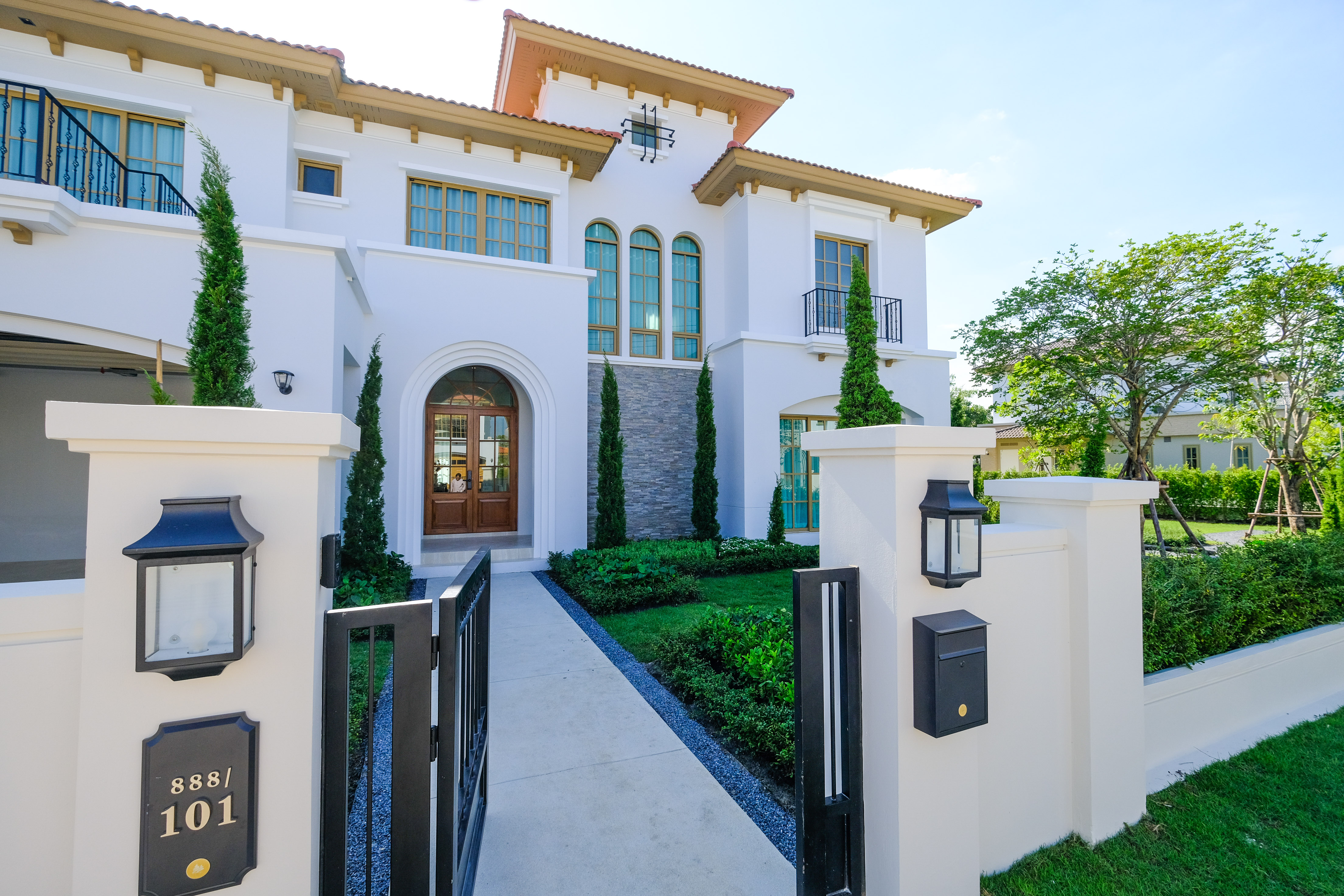
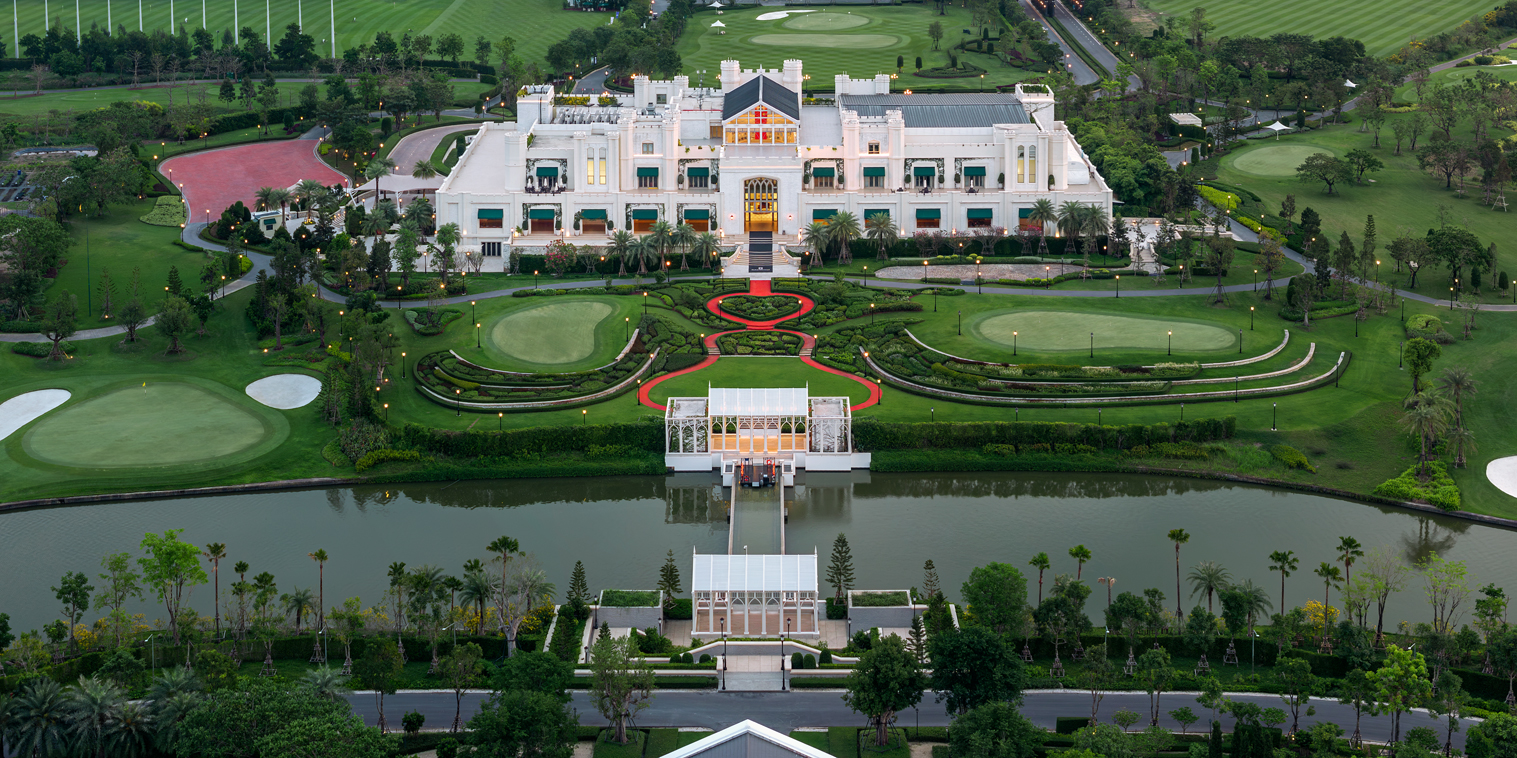
Not every luxury investment in Thailand is a downtown condo. One example of a different model is Reignwood Park in Lam Luk Ka, Pathum Thani, a large-scale mixed-use community built around an international school, a golf club, and a shopping mall, alongside three landed-house sub-brands: Estate, Sonia, and Sereno. The corridor's connectivity is set to strengthen further, with the Chalong Rat Expressway extension linking Chatuchot to Lam Luk Ka currently under construction and slated for completion by mid-2028. This enhances Lam Luk Ka’s appeal as a future residential destination and a location with long-term investment potential.
It's a useful illustration of the trade-off covered earlier in this guide: land, space, and lifestyle infrastructure outside the city, rather than a high-rise unit inside it, and it's worth remembering that landed houses like these fall under the leasehold-for-land rules described above for any foreign buyer, even though Thai nationals can purchase them freehold.
Due Diligence Basics Worth Repeating
A few habits apply regardless of where or what you buy in Thailand. Always verify the title deed at the Land Office yourself rather than relying solely on a developer or agent's word. For resale property, request a debt-free letter and confirm there's no existing mortgage or encumbrance that needs to be cleared before transfer. For condos, check the current foreign ownership quota before committing, since a building can fill its 49% cap. Since all transfer taxes are calculated on the higher of the appraised value or the declared sale price, don't assume you can under-declare a sale price to save money; the Treasury Department's own valuation will catch the difference.
The Bottom Line
Thai real estate remains genuinely attractive for foreign and domestic investors alike, but real estate investment in Thailand isn't one market with one set of rules. What you can own, what it costs, how you'd finance it, and whether it helps with a visa all depend heavily on the property type and your own nationality and circumstances. This guide covers the general landscape accurately as of 2026, but tax rates, visa thresholds, and lending terms in Thailand shift on policy cycles. Before committing to a purchase, it's genuinely worth engaging a Thai-licensed lawyer and, where relevant, a tax advisor in your home country, rather than relying on any single guide, including this one, as the final word.
Sources
Forbes and Partners, "Thailand Property Transfer Fees & Tax Guide (2025/2026)", January 2026
Varsovia Estate, "Bangkok Property Transaction Costs 2026" and "Thailand Property Taxes 2026: Rates for Buyers"
Siam Legal International, "Property Taxes in Thailand"
Bamboo Routes, "Property Foreign Ownership Thailand (2026)", January 2026
Horizon Homes Koh Samui, "Getting a Mortgage in Thailand as a Foreigner: The 2026 Approval Guide"
Alestria Property, "Can Foreigners Get a Mortgage in Thailand? (2026 Guide)", May 2026
Global Law Experts, "Property Visa Thailand", June 2026
Tilleke & Gibbins, "Thailand's LTR Visa Pathway Through Property Investment", April 2026
Houseviser, "Thailand Privilege (Elite) Visa for property buyers", May 2026
Real Estate Information Center (REIC), residential transfer data, 2025
CBRE, "2026 Thailand Real Estate Market Outlook"
Savills, "Thailand Property Market 2026: Strategic Outlook & Emerging Trends"
Realting.com, "Thailand Property Purchase Taxes and Fees", May 2026
Thaiger, "Average house price in Thailand by region (2026)"