Chinese-Thai Heritage and Cultural Life in Bangkok: Why Reignwood Park Offers Something Deeper
Bangkok is one of the world's great cities for cultural depth and few threads run deeper through its identity than the relationship between Chinese and Thai culture. It is a relationship centuries in the making, woven so thoroughly into the fabric of everyday Bangkok life that it has become almost invisible: in the food, the architecture, the family names, the temples, the festivals, and the language of commerce that built the city.
For residents of an exclusive community in Bangkok, that cultural richness is not just a backdrop. It is a daily reality, one that Reignwood Park is uniquely positioned to bring to life in a meaningful and lasting way.
Key Takeaways
- Reignwood Park offers a distinctive cultural dimension that reflects the long-standing relationship between Chinese and Thai heritage through architecture, events, and community programming.
- The East-West Cultural Exchange Centre features a replica of the historic Hall of Benevolence and Longevity from Beijing's Summer Palace, creating a landmark cultural attraction within the community.
- Residents have access to international cultural, sporting, and lifestyle events that connect local living with global experiences.
- Beyond luxury homes and amenities, Reignwood Park provides a culturally rich environment designed for families who value heritage, identity, and cross-cultural exchange.
Centuries in the Making of The Chinese-Thai Story
For centuries, Chinese migrants came to Thailand, with traders from China arriving in Ayutthaya as early as the 13th century. Bangkok's Chinatown is among the largest in the world, founded in 1782 when merchants were relocated to establish Bangkok as Thailand's capital on Rattanakosin Island.
The depth of Chinese influence on Bangkok goes far beyond Chinatown's famous Yaowarat Road. Current estimates suggest 40 to 50 percent of Bangkok's population claims some Chinese ancestry, though centuries of intermarriage and cultural assimilation have created a hybrid Sino-Thai identity rather than a separate Chinese minority. Early immigrants from southern China brought merchant skills, business networks, and a work ethic that enabled economic dominance in retail trade, rice milling, and import-export operations, with subsequent generations achieving higher social status through education, government service, and intermarriage into Thai aristocracy.
Six out of the last ten Thai prime ministers are of part-Chinese descent, and King Rama I, the founding monarch of the current Thai royal house, is himself of half-Chinese descent.
Chinese New Year in Bangkok
Each year, this heritage comes most visibly to life during Chinese New Year, an event that Bangkok celebrates with a scale and energy few cities outside mainland China can match.
Yaowarat Road transforms into the epicenter of Chinese New Year celebration, with streets adorned with red lanterns, banners, and intricate decorations. Lion and dragon dances bring good luck to businesses and homes, families gather for feasts featuring symbolic dishes, and devotees visit Chinese temples such as Wat Mangkon Kamalawat and Wat Leng Noei Yi to seek blessings for health and prosperity.
In 2026, Chinese New Year falls on 17 February, ushering in the Year of the Horse. While the Yaowarat district main event was cancelled this year in observance of national mourning, celebrations remained lively across the city with the Ministry of Culture supporting the continuation of Thai-Chinese arts and culture through spectacular performances including lion and dragon dances, and Thai-Chinese cultural showcases.
For families living in an exclusive community near Bangkok, these celebrations are not simply tourist attractions to visit. They are a living expression of the cultural identity that their neighbourhood, their school community, and their social world are built upon.
Reignwood Park: A Development That Reflects This Heritage

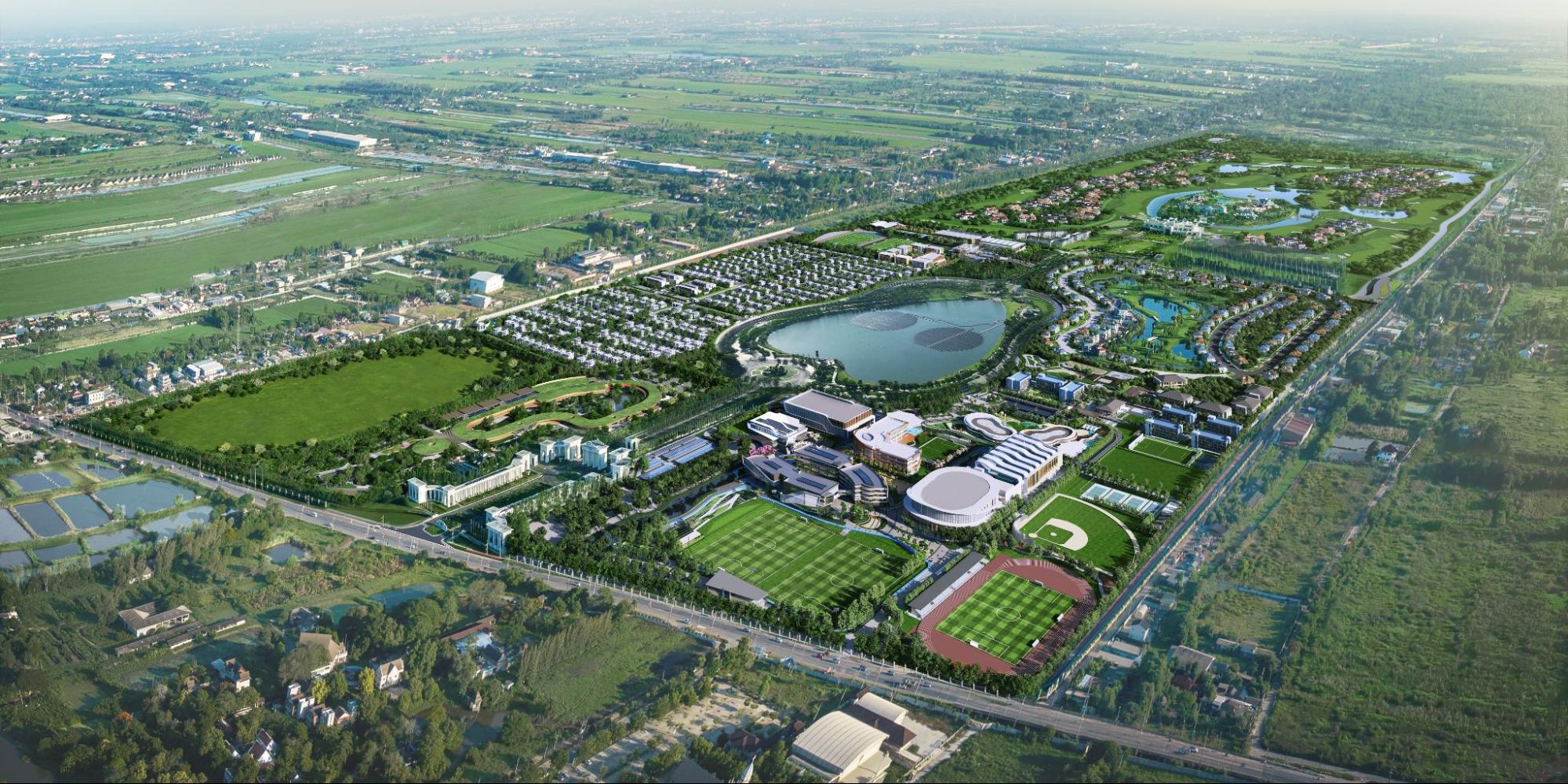
Most luxury developments in Bangkok offer amenities. Reignwood Park offers something rarer: a genuine connection to the cultural and historical story that gives this part of the world its character.
That connection begins with the founding vision of Reignwood Group itself. The Reignwood Culture Foundation was created to help drive cultural exchange between East and West, a mission that runs through the group's global portfolio, from Ten Trinity Square in London to its developments in Beijing and now Thailand.
At Reignwood Park, this East-West philosophy is made physical in one of the most extraordinary architectural gestures in any residential development anywhere in Southeast Asia.
Center of the East-West Cultural Exchange
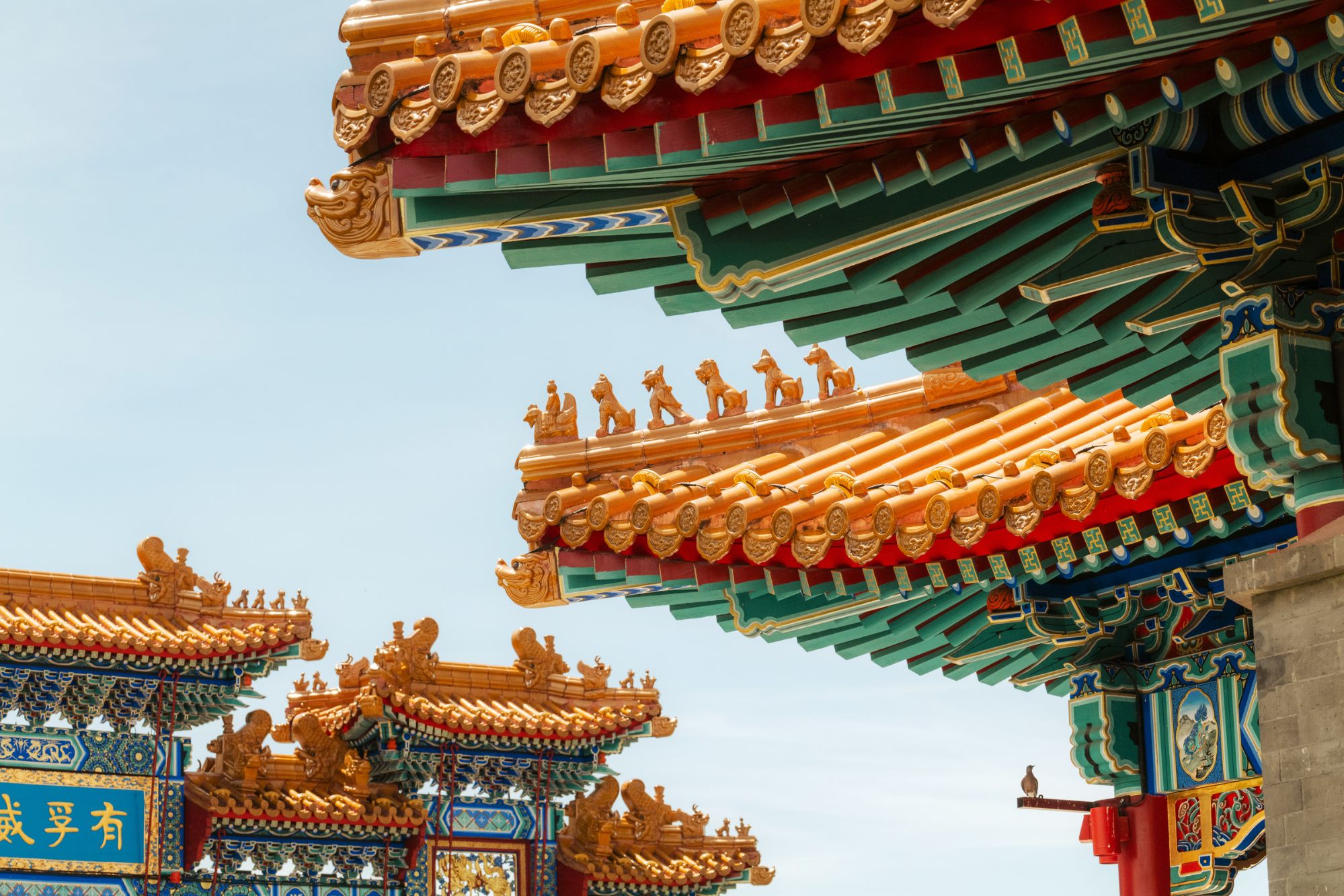
Within the grounds of Robinswood Golf Club at Reignwood Park stands a structure unlike anything else in Thailand, an exact replica of the Hall of Benevolence and Longevity (Renshou Dian), one of the most historically significant buildings in imperial China.
The original, located within Beijing's Summer Palace, carries extraordinary historical weight. Built in 1750 as the emperor's office, it was destroyed by Anglo-French forces in 1860 and rebuilt in 1886, symbolising that benevolent rule leads to longevity. After reconstruction, both Empress Dowager Cixi and Emperor Guangxu conducted state affairs and met ministers here.
The Hall of Benevolence and Longevity functioned as the principal administrative hall of the Summer Palace. The hall stands on a raised stone platform to signify authority, with glazed tile roofing and ridge decorations arranged according to strict imperial hierarchical rules.
The East-West Cultural Exchange Centre at Reignwood Park is based on this prototype, granted through rare permission from the Chinese government, reflecting Reignwood Group's Chinese ancestry and its mission to create a symbol of cross-cultural exchange and understanding.
The result is a space that is genuinely unlike anything else available to residents of a private community in Thailand. Member events, globally-minded gatherings, and cultural functions are hosted here, giving the Reignwood Park community a venue that connects daily life at a luxury estate in Pathum Thani directly to one of the great threads of world cultural history.
Cultural Lifestyle as a Living Programme, Not Just Architecture
The East-West cultural dimension at Reignwood Park is not simply expressed through one building. It runs through the community's event programming.
Reignwood Park has previously hosted "The East Meets West Concert" which brought together world-class international and Thai artists in a single evening at the project, combining Western performance traditions with Thai cultural expression.
The community's broader events calendar reflects this same sensibility. The Reignwood Icons of Football 2026, returning to Bangkok from 31 January to 1 February 2026 and set against the backdrop of Robinswood Golf Course, brings 24 iconic former international footballers to compete in front of a global broadcast audience, placing Reignwood Park alongside New York, Dubai, Las Vegas, and London as host cities for the series.
Robinswood Golf Club will also host the Asian Golf Industry Federation Club and Turf Management Conference Thailand in May 2026, welcoming golf course managers and industry professionals from across Thailand and Southeast Asia.
This is a community that hosts events of genuine international significance as a living residential estate. For residents who seek cultural depth, not just housing, that distinction matters enormously.
An Exclusive Community in Bangkok Built for Those Who Value Cultural Identity
The story of Chinese-Thai heritage in Bangkok is ultimately a story about what happens when two great cultures choose to build something together rather than apart. The result, visible in Bangkok's food, its architecture, its festivals, its families, and its commercial genius, is one of the most distinctive cultural identities in Asia.
Bangkok's Chinese community contributes fundamental elements to contemporary culture through Chinese surnames, commercial traditions, ancestor worship practices, cuisine, and linguistic borrowings that permeate Bangkok life to the point where Chinese influence becomes invisible, integrated rather than foreign.
Reignwood Park does not simply sit within this story. Through its Chinese founder's vision, its East-West Cultural Exchange Centre, its replica of one of imperial China's most historically significant halls, and its ongoing programme of cultural events that bridge East and West, it actively embodies it.
For those searching for an exclusive community in Bangkok that offers genuine cultural lifestyle, Reignwood Park stands apart.
This is a place with cultural depth. Not just housing.
To learn more about life at Reignwood Park, contact the team at salesoffice@reignwoodth.com or call +66 (0)82 892 2446.