What Makes Luxury Property Near Bangkok a Strong Long-Term Investment
If you're looking at luxury homes near Bangkok, you've probably asked yourself the same question everyone does: is this actually a smart long-term buy, or am I just paying for a nice lifestyle? Fair question. The good news is you don't have to guess. Thailand's property market gives some pretty clear signals, once you know where to look.
Key Takeaways
- Thailand's mass-market property dropped 9.3% in the first nine months of 2025, though the luxury segment is telling a different story: existing luxury supply is at a 93% sales rate and downtown asking prices are expected to climb up to 15% in 2026.
- Infrastructure is the single most reliable predictor of long-term capital growth in Thailand. The 24 billion THB Chalong Rat Expressway Extension, targeting completion by mid-2028, will directly improve connectivity between Lam Luk Ka and central Bangkok.
- KIS International School at Reignwood Park has capacity for up to 2,000 students, while the surrounding residential community currently has just over 494 completed homes. That structural gap supports steady rental and resale demand over time.
- Properties most likely to hold value share three traits: genuinely scarce land, community infrastructure that is hard to replicate, and a developer with a long-term proven track record.
Not All Thai Property Moves at the Same Speed
Here's the thing people often miss: Thailand doesn't really have one property market, it has two. The everyday, mass-market segment has had a rough few years, weighed down by household debt and tighter bank lending. Nationwide, residential transfers actually dropped 9.3% in the first nine months of 2025, according to the Real Estate Information Center (REIC).
Luxury property is telling a completely different story. CBRE's 2026 outlook for Thailand describes a clear "flight to quality," with buyers gravitating toward higher-end homes, existing luxury supply already at a 93% sales rate, and downtown asking prices expected to climb as much as 15% this year. Savills sees the same split: while everyday housing struggles, the luxury segment keeps growing, increasingly fueled by international buyers. Even Bangkok's condo price index is up 3.4% year-on-year, and Savills points to strength at the upper end as the main reason why.
There's a good rental story here too. JLL found that high-end rents in Bangkok jumped 8.4% year-on-year, as more people chose to rent rather than lock into a mortgage. For anyone thinking about long-term value, that's a genuinely reassuring sign. Rising rents alongside firming prices usually means real demand, not just hype.
The One Thing That Predicts Long-Term Value Better Than Anything Else: Infrastructure
If you ask property experts what actually drives long-term appreciation, most will say the same word: infrastructure. Savills is blunt about it, calling infrastructure the single most reliable predictor of long-term capital growth in Thailand, pointing to how new transit lines and expressways can turn a quiet, overlooked area into a genuinely desirable one.
That's exactly what's happening around Lam Luk Ka in Pathum Thani right now. The Chalong Rat Expressway Extension, a 16.2-kilometre elevated expressway worth roughly 24 billion baht, is currently under construction, with the Expressway Authority of Thailand targeting completion by mid-2028. Once it opens, getting between Lam Luk Ka and central Bangkok should get noticeably easier, with a lot less reliance on surface roads like Lam Luk Ka Road. A related highway project is also being built to connect straight into it.
This isn't just one road project either. Nation Thailand reported in mid-2026 that major developers are actively reshaping how they think about Pathum Thani and neighbouring Nonthaburi, moving away from the old "Bangkok overflow" label and treating these areas as real economic and residential hubs in their own right, thanks to new expressways, road upgrades, and rail links like the Red Line extension toward Thammasat University's Rangsit campus.
So What Actually Makes One Property a Better Long-Term Bet Than Another?
Good infrastructure and a growing area help the whole neighbourhood. The verdict comes down to a few more specific things: how scarce the land really is, how much genuine infrastructure sits within the community itself, and how solid the developer is.
Large, landed homes within a reasonable drive of Bangkok are becoming genuinely hard to find. As the inner city fills up with condo towers, space for a proper house with a garden keeps shrinking. And a community that comes with its own international school, private golf club, and full sports and wellness facilities isn't something a competitor can just build overnight. That kind of depth is part of what protects value over time.
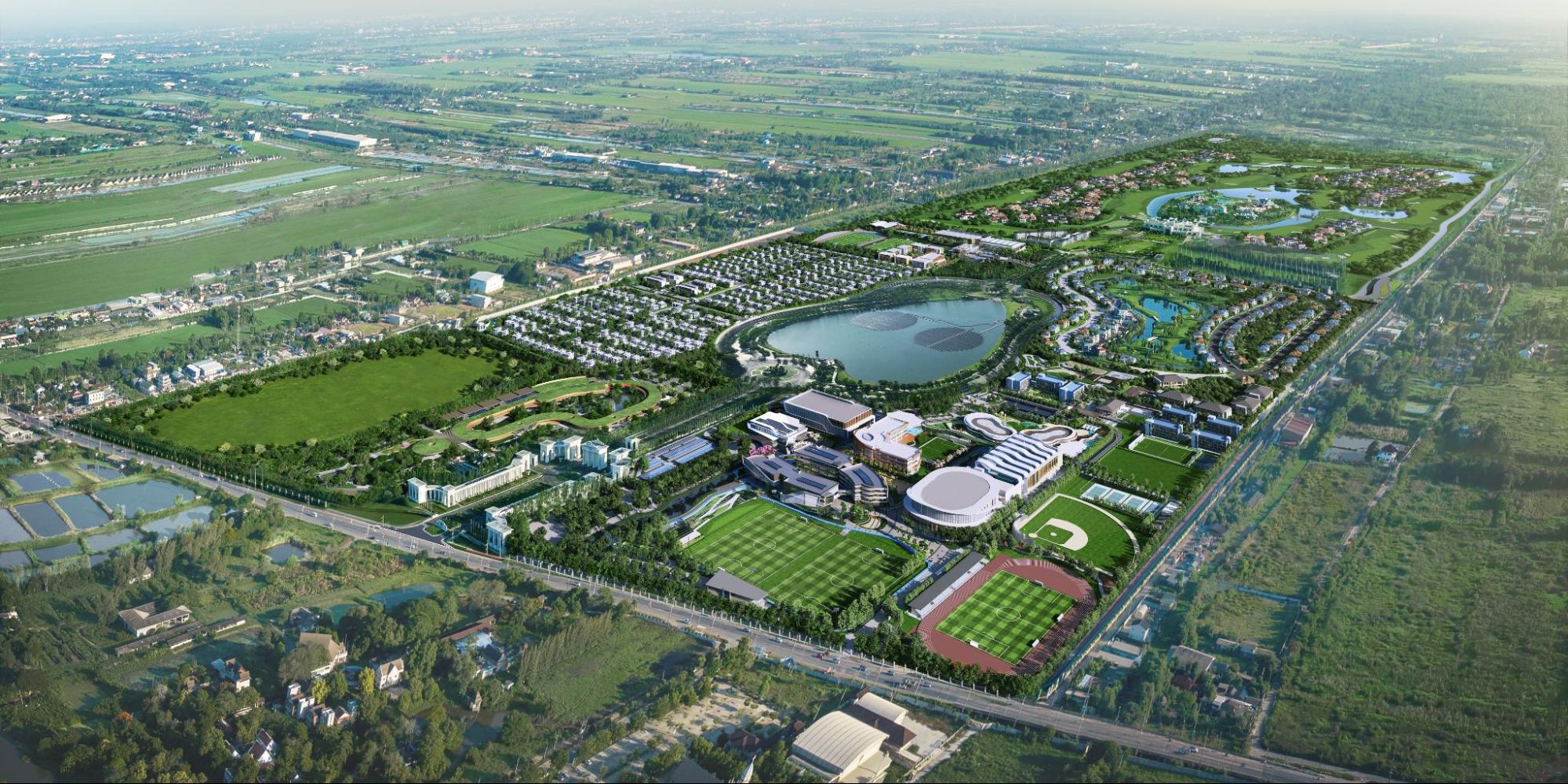
Reignwood Park is a good example of this in practice. It's a roughly 50-billion-baht development built around KIS International School Reignwood Park, a 60-acre campus and Bangkok's only IB day and boarding school, with room for up to 2,000 students. The surrounding residential community, meanwhile, currently has just over 494 completed homes. That gap between how many families the school can serve and how many homes actually exist nearby is a pretty simple, structural reason to expect steady rental and resale demand, regardless of what the wider market is doing.
If you're specifically looking at houses, Reignwood Park's Reignwood Residence Collection currently comes in three flavours: Estate, Sonia, and Sereno, with prices starting from 16.8 million THB for Sonia. Buying into the collection also comes with membership at Robinswood Golf Club, which adds another layer of lifestyle value on top of the property itself.
Why the Developer Behind It Matters Just as Much as the Property
A beautiful house is only as safe a bet as the company that built it. This is where it's worth looking at who's actually behind the development. Reignwood Group's track record includes Ten Trinity Square in London, home to the Four Seasons Hotel London, an architectural landmark overlooking the Tower of London, and Wentworth Club in Surrey, England, the storied home of the BMW PGA Championship and headquarters of the DP World Tour. A developer with decades of experience delivering hospitality and golf-anchored real estate on that scale simply carries less risk than a newer or purely local developer, especially if you're thinking in decades rather than just a few years.
A Quick Note on Ownership Rules
One practical thing worth knowing upfront: ownership rules aren't the same for everyone. Thai nationals can buy land and houses outright, no complications. Foreign buyers can't own land in Thailand, so for a landed house, the usual route is a registered long-term lease on the land, typically 30 years with renewal terms built in, while still owning the house itself outright. If you're a foreign buyer considering a luxury home near Bangkok, it's worth confirming exactly how ownership is structured and getting independent legal advice before signing anything, rather than relying on brochures or sales conversations alone.
So, Is It Actually a Sound Investment?
Thailand's luxury and prime property segment is one of the more resilient corners of a market that's still finding its footing elsewhere, backed by rising rents, steady international demand, and real, government-funded infrastructure reaching into areas like Lam Luk Ka. Within that segment, the properties most likely to hold their value and keep growing tend to share the same handful of traits: land that's genuinely hard to find, a community with real infrastructure that's difficult to copy, and a developer with a proven, long-term track record.
Sources
Real Estate Information Center (REIC), residential transfer data, 2025
CBRE, "2026 Thailand Real Estate Market Outlook"
Savills, "Thailand Property Market 2026: Strategic Outlook & Emerging Trends"
JLL, Bangkok high-end/luxury rental data, Q3 2025
Cushman & Wakefield, "Thailand Real Estate Market Outlook 2025–2026"
Bangkok Post, "Expressway projects in pipeline" (Chalong Rat Expressway Extension progress and mid-2028 completion target), September 2025
Nation Thailand, "Big developers reshape Bang Yai-Rangsit growth zones", June 2026
Aster of Asia / Varsovia Estate / Taxes for Expats, Thailand foreign property ownership rules, 2026